
Mutual vs Stock Insurance Companies
Saral Toms
2/21/20262 min read
Mutual Vs Stock Insurance Companies - What’s the Core Difference?
When choosing an Indexed Universal Life (IUL) insurance carrier, you may hear this common advice: “Go with a mutual company instead of a stock company.”
But why do people say that — and is it always true? Here’s a clear, client-friendly comparison to help you make an informed decision.
Mutual Insurance Company
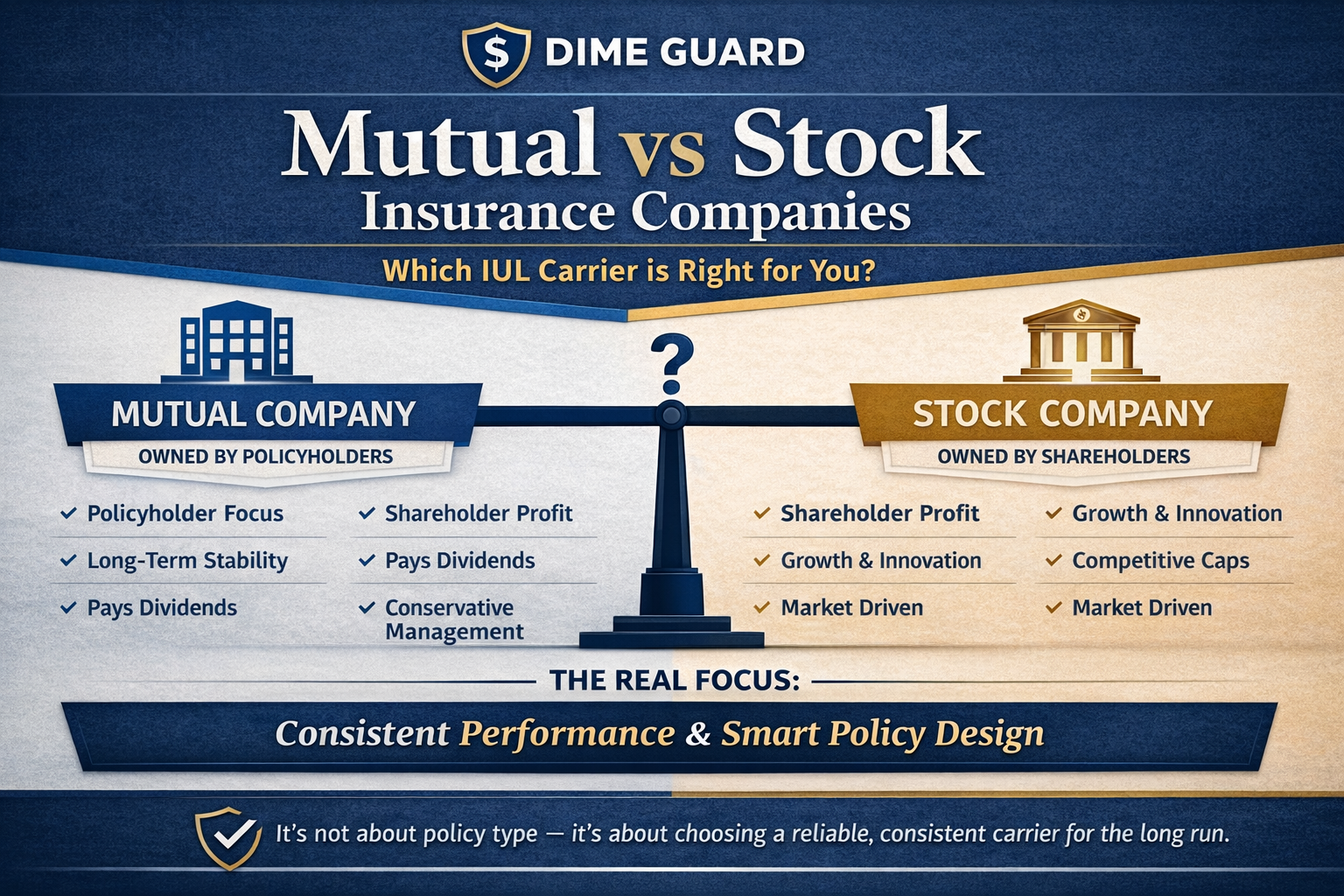
A mutual insurance company is owned by its policyholders. That means the people who own policies are essentially the “owners” of the company.
Stock Insurance Company
A stock insurance company is owned by shareholders (investors). The company’s goals often include delivering returns to those shareholders.
Mutual vs Stock: Quick Comparison
Mutual Company: Owned by policyholders; focus on long-term stability and policyholder value.
Stock Company: Owned by shareholders; focus on growth, innovation, and shareholder returns.
Why Many People Prefer Mutual Companies for IUL
1) Better Alignment With Policyholders
Mutual companies are built around the idea of serving policyholders first. Many people feel that creates stronger long-term alignment with customers.
2) Long-Term Stability Mindset
Because mutual companies are not pressured by quarterly earnings reports in the same way, they often focus on long-term financial strength and consistency.
3) More Conservative Assumptions
Mutual companies often price and manage products with a conservative mindset. In IUL planning, that can be helpful for long-term policy sustainability.
4) Less “Product Engineering” Pressure
Some consumers worry that stock companies may make faster or more frequent product changes to meet earnings targets. With IUL policies, this may matter because caps, participation rates, and internal costs can change over time.
Important: Why Stock Companies Can Be Great Too
Stock companies can offer real advantages, especially for clients who value:
1) Innovation and Index Options
Stock companies may introduce more frequent product updates, index choices, and strategy features.
2) Access to Capital
Stock companies can raise funds through capital markets, which may support growth and product development.
3) Competitive Pricing and Illustrations
Stock companies often compete aggressively on features and pricing — sometimes resulting in attractive policy designs.
The Truth: Mutual vs Stock Isn’t the Most Important Factor
A common misconception is:
“Mutual is always better.”
The reality is:
The best carrier is the one with consistent long-term behavior and a well-designed policy.
What Matters Most When Choosing an IUL Carrier
Instead of focusing only on “mutual vs stock,” evaluate the carrier using these key factors:
Cap and participation rate stability: Has the company stayed consistent over time?
Cost structure: Cost of insurance (COI), admin fees, and rider charges.
Hedging strategy strength: The carrier’s ability to deliver reliable index crediting.
Policy design: Overfunding strategy, premium structure, and MEC management.
Renewal behavior: How the carrier treats policyholders after the sale.
A Simple Dime Guard Conclusion
Some people prefer mutual companies because they are owned by policyholders and often emphasize long-term stability. Stock companies may offer more innovation and competitive features.
At Dime Guard, we focus on the factors that matter most: consistency, cost structure, and smart policy design — so your plan has the best chance to perform over time.
Want Help Choosing the Right IUL Carrier?
If you’d like a carrier comparison tailored to your goals (retirement income, wealth transfer, tax strategy, or protection), reach out to us. Give us a call for a complimentary consultation.